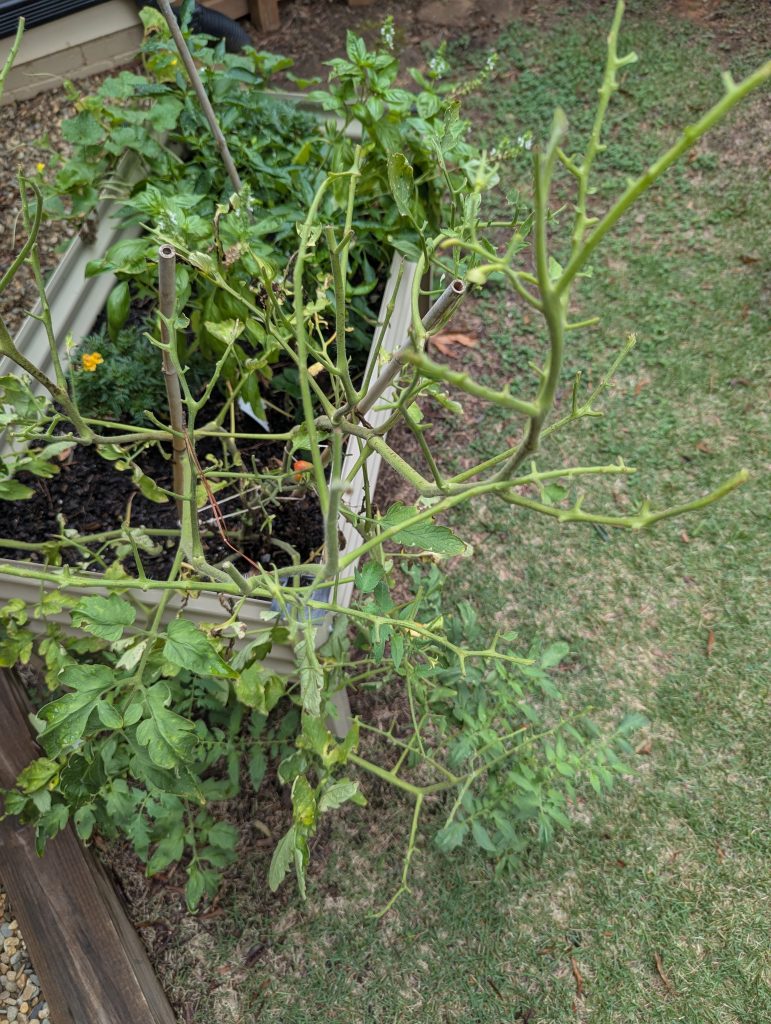
Wondering what happened to your tomato plant overnight?
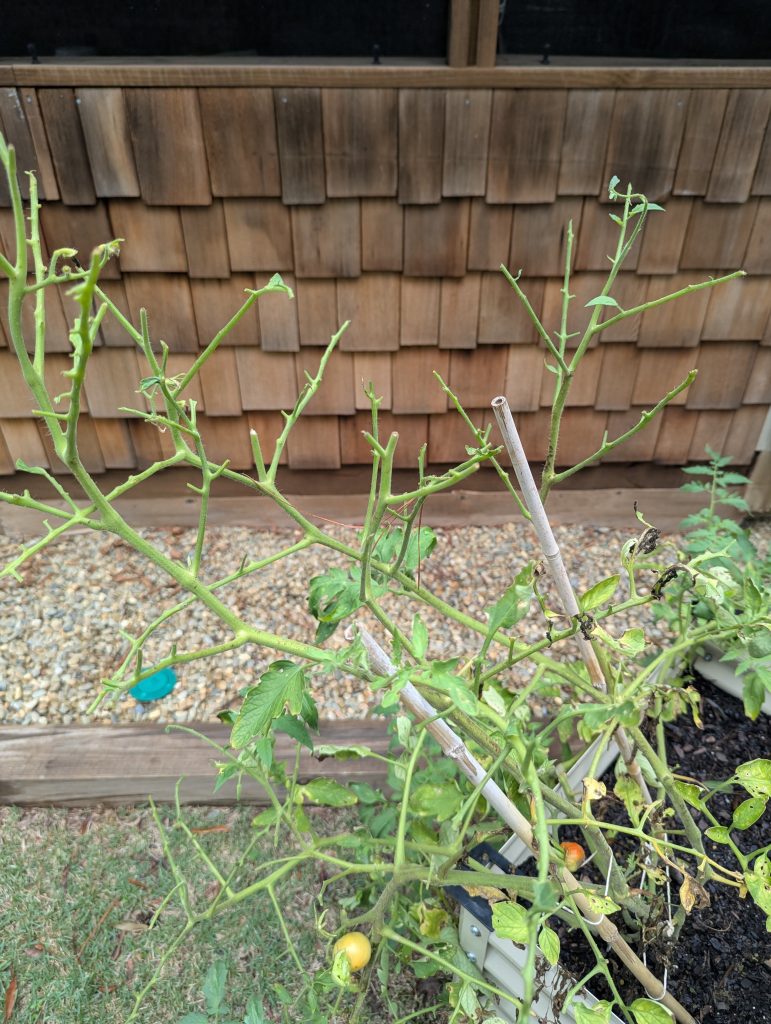
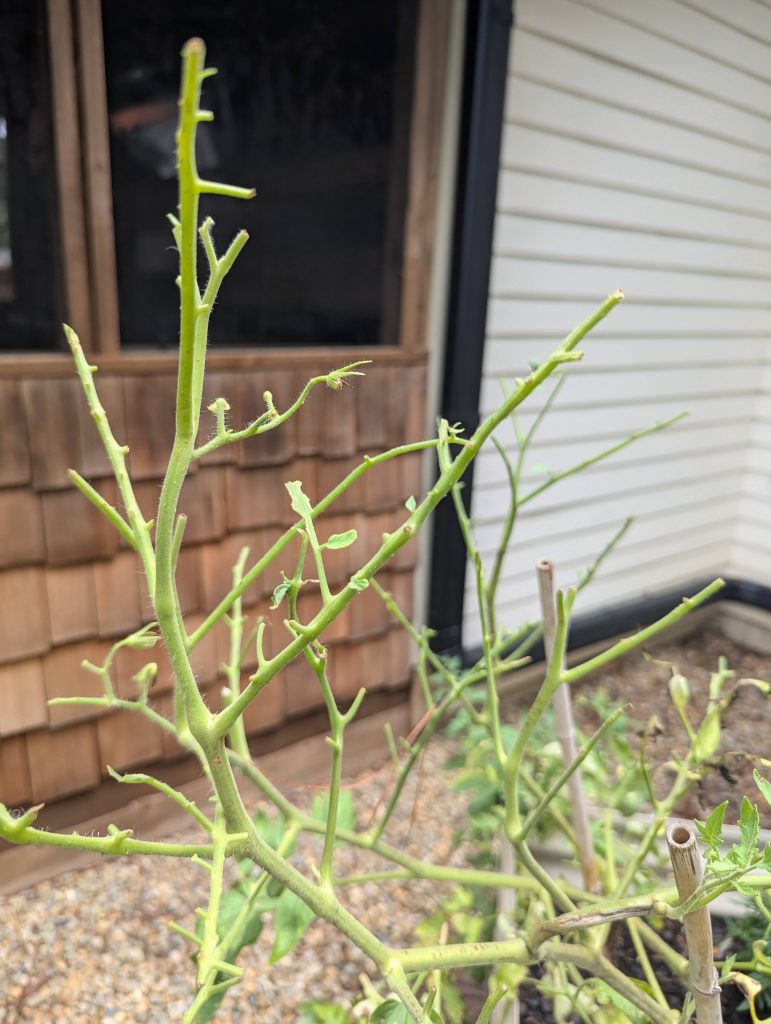
I was visiting my mom recently and noticed that her once-beautiful tomato plant had suddenly lost all of its leaves at the top. As a newbie to North Carolina (she just moved from Colorado this past January to be closer to family), she was at a complete loss.
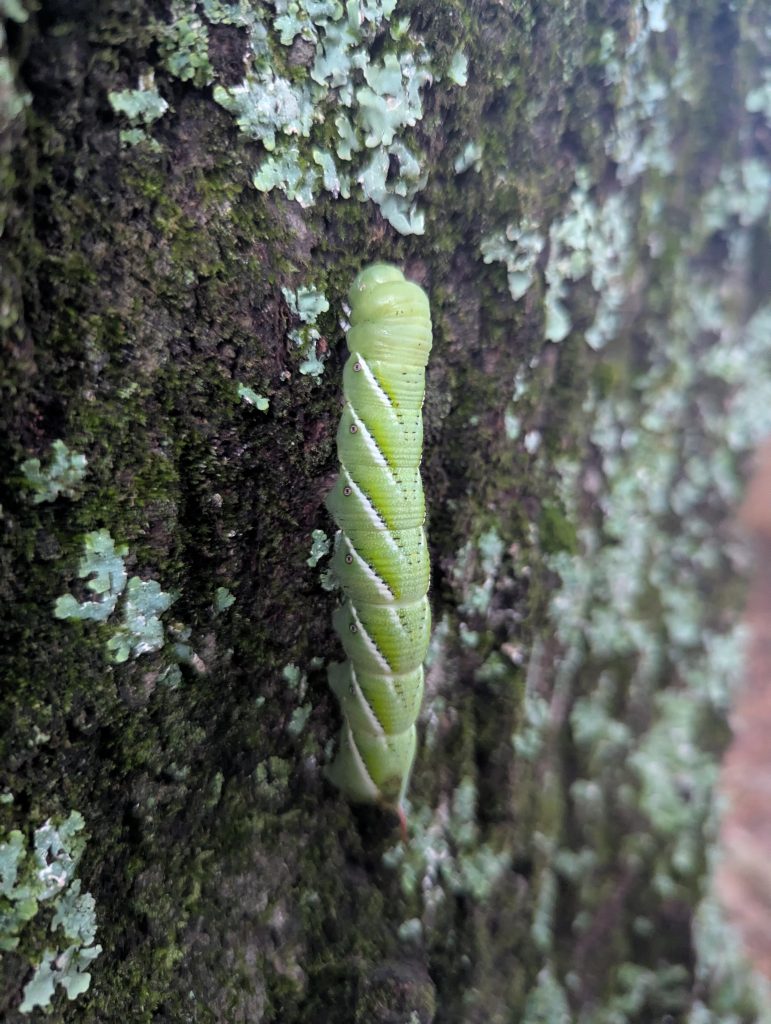
Luckily for her, we had dealt with a similar problem at the Hopkins Household last summer. The answer to her conundrum of a healthy tomato plant losing half its leaves in one day? The Tobacco Hornworm.
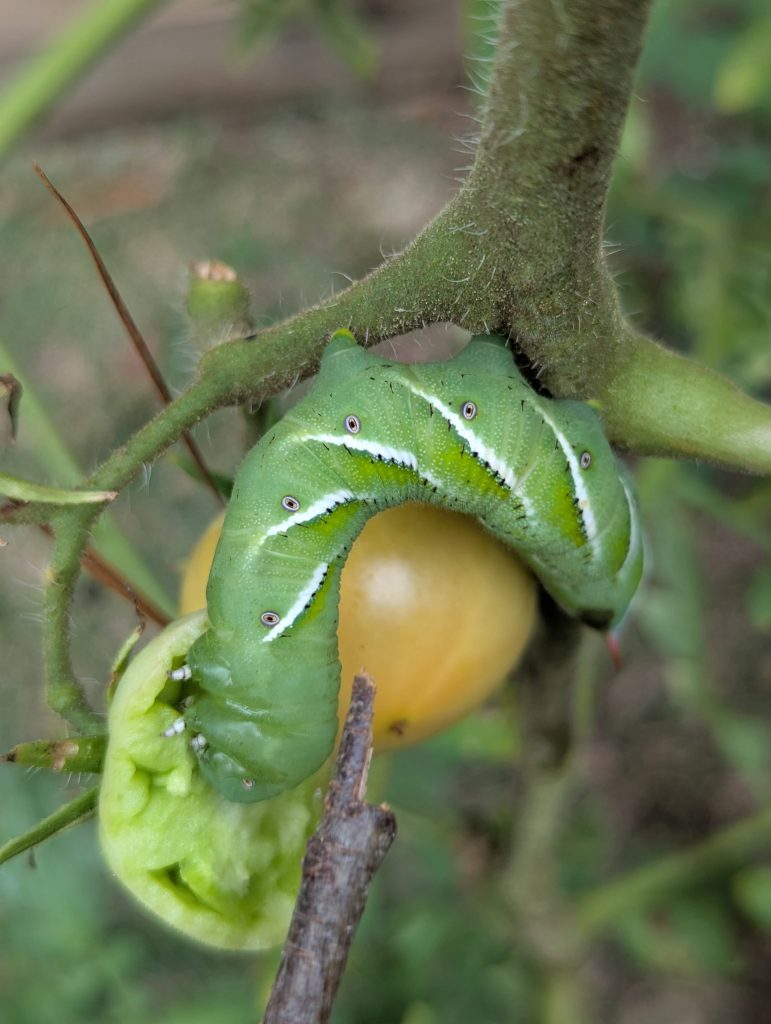
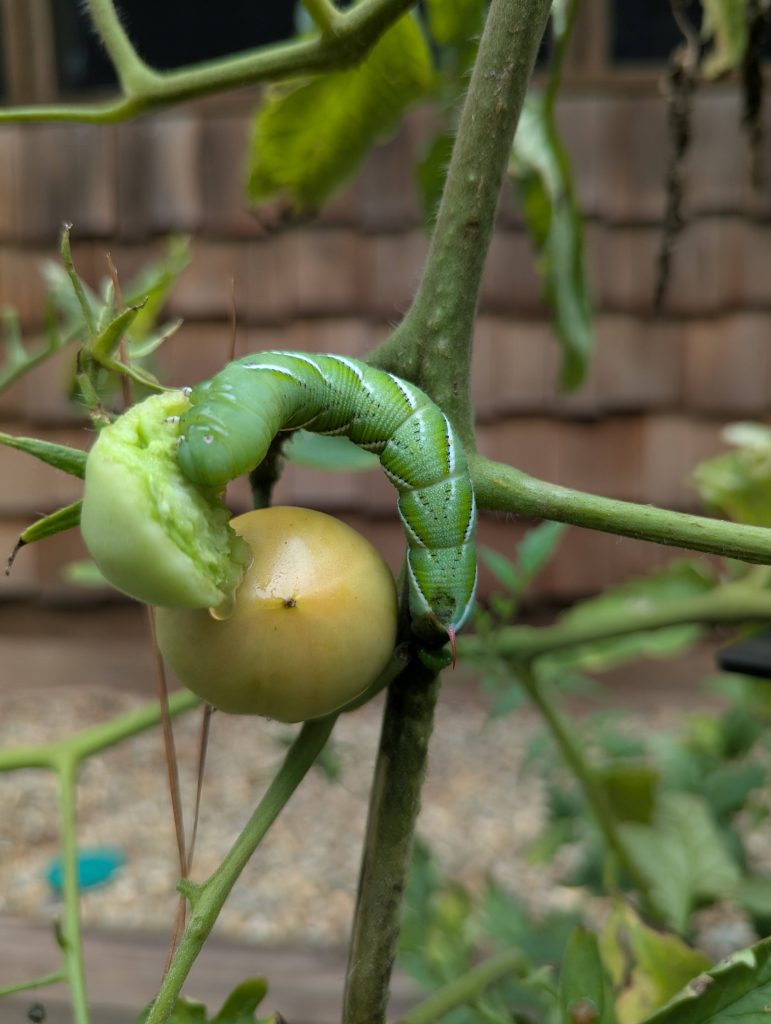
We attempted a quick game of “Where’s Waldo” within her tomato plant and quickly found a massive green caterpillar munching on a tomato near the middle of her barren plant. Boy, was it a big boy!
I’ve seen videos where gardeners feed tobacco hornworms to their chickens or drop them in soapy water. Maybe I’m a softie, but I couldn’t imagine hurting it. Instead, we used a stick to carefully move him far away from her yard so he could find a different wild plant to snack on.
4 Clear Signs Your Tomato Plant Has Hornworms
Tobacco and tomato hornworms are voracious eaters that can strip your plant of its leaves and fruit in just a couple of days. Their bright green bodies blend in so perfectly with the foliage that you will almost always notice the damage before you find the culprit.
If you suspect you have an unwanted visitor, look for these key signs:
- Rapid Defoliation: Look for missing leaves, chewed stems, and bare branches starting at the top of the plant and moving downward.
- Chewed Fruit: Look for large, deep, and jagged cavities chewed out of both green and ripe tomatoes.
- Dark Green or Black Droppings (Frass): Search the leaves directly below chewed stems for small, dark green or black cylindrical droppings that resemble tiny barrels.
- Physical Identification: A true Tobacco Hornworm has seven diagonal white stripes on each side and a signature red horn on its rear. (Note: The similar Tomato Hornworm has eight V-shaped stripes and a black horn, but both do the exact same damage).
Pro Tip: If you can’t find the caterpillar during the day, go out after dark with a UV blacklight flashlight. Hornworms glow a bright, neon green under UV light, making them incredibly easy to spot!
How to Get Rid of Tobacco Hornworms Organically
Once you locate a hornworm, you must take action immediately to protect the rest of your garden.
1. Handpick and Relocate (or Remove)
Gently pull the hornworm off the plant. Don’t worry as they are completely harmless to humans and will not sting or bite.
2. The Braconid Wasp Exception (Do Not Kill!)
If you find a hornworm covered in what looks like small white grains of rice, leave it alone! These are the cocoons of the beneficial parasitic Braconid Wasp. The wasp larvae have already neutralized the hornworm so it can no longer eat, and letting them hatch means you will have a natural army of predatory wasps protecting your garden for the rest of the season.
3. Use Organic Sprays
If you have a larger infestation, you can use organic treatments:
- Bt (Bacillus thuringiensis): A naturally occurring soil bacterium spray that specifically targets caterpillars without harming bees, birds, or humans.
- Neem Oil: An organic spray that works well as a preventative deterrent for younger pests.
How to Prevent Hornworms in the Future
Thankfully, the Hopkins Household hasn’t dealt with a tobacco hornworm infestation since our first go-round. We keep them away by following a few simple preventative steps:
- Till the Soil: Hornworms pupate (go into their brown, spindle-like cocoon phase) three to four inches deep in the dirt. Tilling your garden soil in the late fall or early spring exposes these overwintering pupae to cold temperatures and predators like birds, destroying up to ninety percent of them.
- Plant Companions:
- Marigolds and Basil: Produce strong scents that mask the smell of tomatoes, confusing the adult Sphinx Moths.
- Dill and Parsley: Attract ladybugs and predatory wasps that eat hornworm eggs and young larvae.
- Borage: Deters hornworms while improving tomato flavor and growth.
- Apply Neem Oil Early: Neem oil contains natural organic compounds that taste bitter to pests. Spraying your plants with neem oil early in the season makes the leaves unappealing to moths looking to lay eggs, and halts the growth of tiny, newly hatched caterpillars.
Hopefully, these tips help solve your tomato plant conundrum and give you the tools you need to make your garden thrive. I would hate for you to miss out on the fruits of your labor, especially if you love a good fried green tomato or a classic tomato and cheese sandwich as much as I do!
Are you dealing with garden pests? Share your tips and questions in the comments below!