Looking to start a garden, but feeling anxious and overwhelmed about the amount of work required? You love the idea of fresh produce, but you don’t want to waste away tons of time planting, trimming and watering.
Boy, do I have the answer for you. It’s watermelons!
Two years ago we bought a watermelon from the store and waited too long to cut it open. By the time we got around to it, everything was mushy and it had started leaking a little. Whoops! Mom fail!
Adam took the watermelon and chucked it into our backyard near our strawberry bed. He brought Griff and Owen out with him for the show, and the three of them had a time watching it splatter on the red Carolina dirt.
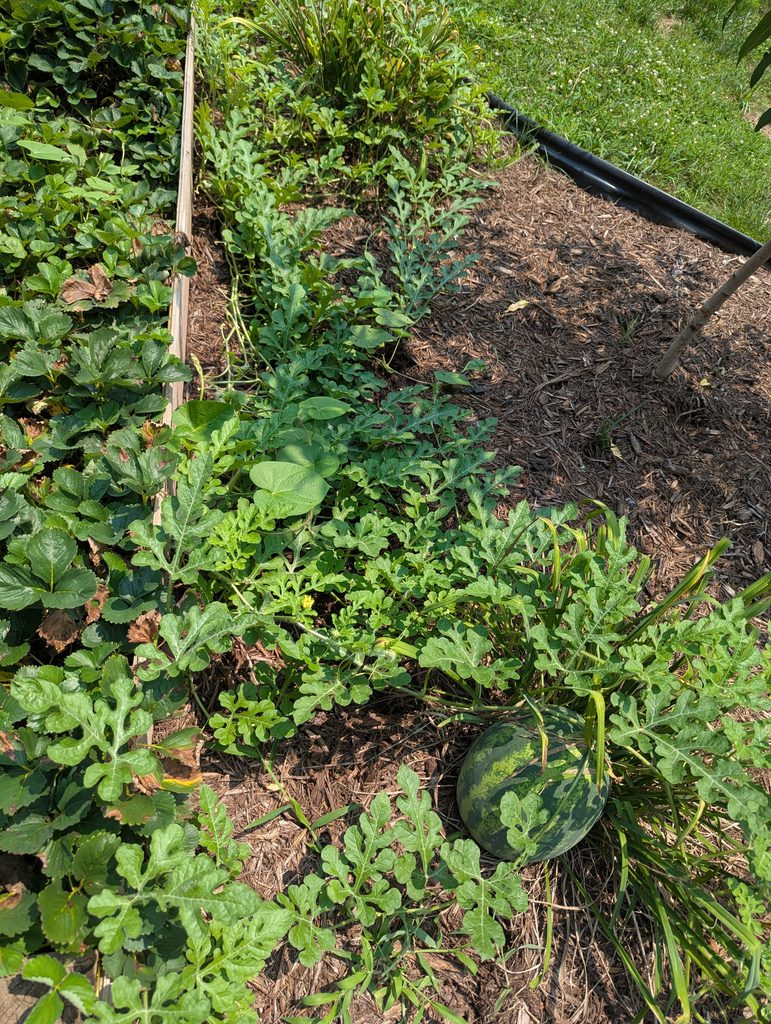
We forgot all about it until the next summer came. Out of nowhere, sprawling green vines with yellow flowers began creeping across the lawn. Fast forward a couple weeks and we we inundated with little green and white striped balls hiding in the foliage.
Adam hadn’t just chucked an overripe watermelon. He accidentally planted our first every watermelon patch. And it’s been back every summer since!
How did that happen, I asked myself. Thankfully Google Gemini came to the rescue with a science lesson that I will share with you now.
1. The Hard Seed Coat.
Watermelon seeds are like tiny vaults with a thick outer shell designed to survive harsh conditions. While winter froze the rest of our backyard, those seeds sat cozy in the dirt, completely protected.
2. A Built-in DIY Compost.
When Adam chucked the watermelon, like a boss, the flesh didn’t just disappear. Instead it broke down into organic material. Essentially, the rich nutrients and moisture of the rotting pulp created a mini-compost pile right where it landed.
3. Deep Dormancy Waiting for the Heat.
Watermelon seeds wait until the ground temperature reaches a warm 70°F to 80°F. Once the summer heat kicked in, the seeds got the signal to burst into life.
4. The “Volunteer” Self-Seeding Cycle.
In gardening terms, plants that pop up on their own without being intentionally planted are called “volunteers.” Every summer, any small watermelon we miss re-seeds the spot for the following year.
In summary, watermelons are clutch for a “lazy” garden. There is enough chaos in life, why add more with all the normal gardening requirements! Watermelons require no tending, they choke-out any weeds that could harm the plant and they are over ninety percent water which means they don’t need you to water them.
If you find yourself with a purposeful or accidental watermelon patch, remember these key things. Give them sun and space, look for the yellow belly to know when to pick and leave one melon out there to keep the cycle alive forever.
But be warned, watermelons take up a ton of space and will overtake your whole yard if you aren’t careful. But try to embrace the backyard chaos for a little bit of summer fun!
Go ahead. Take the watermelon on your counter and chuck it in the yard. See what magic comes next summer!